

What Is a Book Nook? A Guide to Choosing and Building Your First One ✨
Imagine discovering the entrance to a narrow lane, a glowing library or a tiny garden between two books. That is a Book Nook: a vertical miniature world designed especially for a place on the bookshelf.
Most Book Nooks are DIY kits, so their appeal lies in more than the finished display. Building is an important part of the experience. Piece by piece, a scene takes shape and eventually settles between your books.
This guide explains what makes a Book Nook different from other miniatures, how to choose a first project and which details to check before you begin.

💞 What Exactly Is a Book Nook?
It is a diorama designed to stand vertically between books. A miniature house usually sits on a flat surface and can be viewed from one or more sides; a Book Nook uses perspective, architecture and depth to suggest a passage continuing into the bookshelf.
- A story told through space. A lane, library or landscape creates the impression that the world continues beyond the frame.
- A project to build yourself. Assembly calls for care and dexterity, with a level of difficulty that varies from one model to another.
- A lasting object for the shelf. Once built, the scene stands between the books and becomes part of the whole bookcase.
Where Should You Begin: a Kit or Your Own Design?
A DIY kit offers the clearest starting point. The components, sequence and finished composition have already been designed, leaving you free to concentrate on assembly and the details. Always check the individual product page: materials, lighting, power supply, accessories and difficulty are not the same for every model.
The kits include illustrated instructions in English that rely primarily on pictures. The building sequence remains easy to follow even if English is not your first language.
An entirely original design offers more freedom, but it also requires a consistent scale, a stable structure and a plan for perspective, materials and any electrical components.
- Define the scene. Sketch the available space and choose one focal point.
- Work to one scale. Doors, furniture and figures need to feel visually coherent.
- Test-fit before gluing. Check joins, depth and the space required for cables.
- Follow component guidance. Install lighting and power only in a way that suits the materials and intended use.
Themes and Atmospheres to Explore
The right theme is a world you will still enjoy looking into long after the build is complete.
- Books and reading spaces: libraries, bookshops, studies and archives.
- Mystery and magic: alchemists’ workshops, secret passages, schools of magic and fantasy forests.
- Travel and architecture: Japanese lanes, European cafés, stations, harbours and imagined cities.
- Nature and calm: greenhouses, gardens, tree houses and woodland landscapes.
Look beyond the subject to the palette, size and density of detail. Two Book Nooks built around a library can offer very different building experiences and create completely different moods.
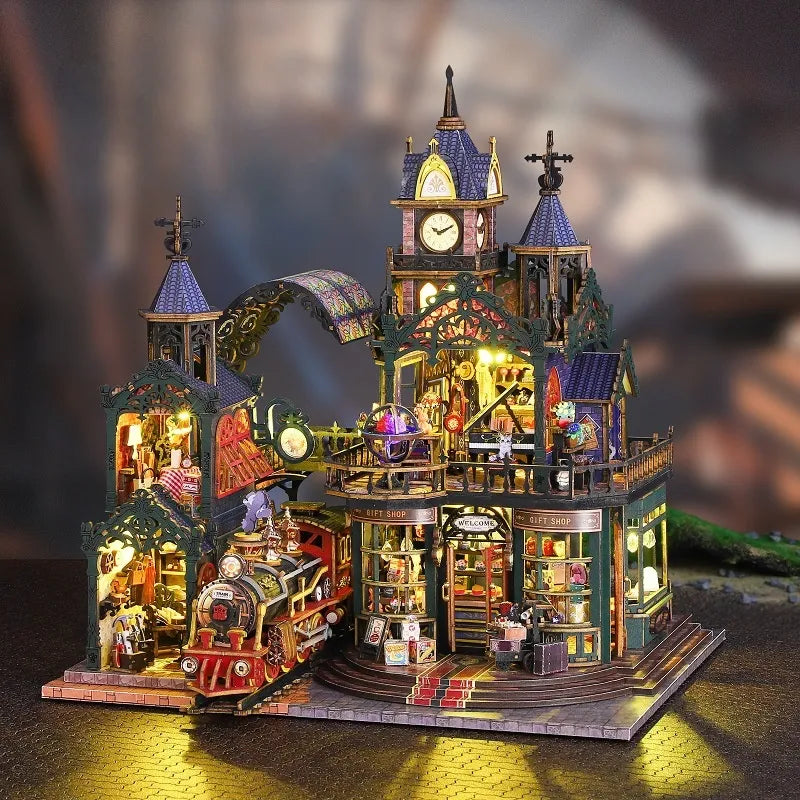
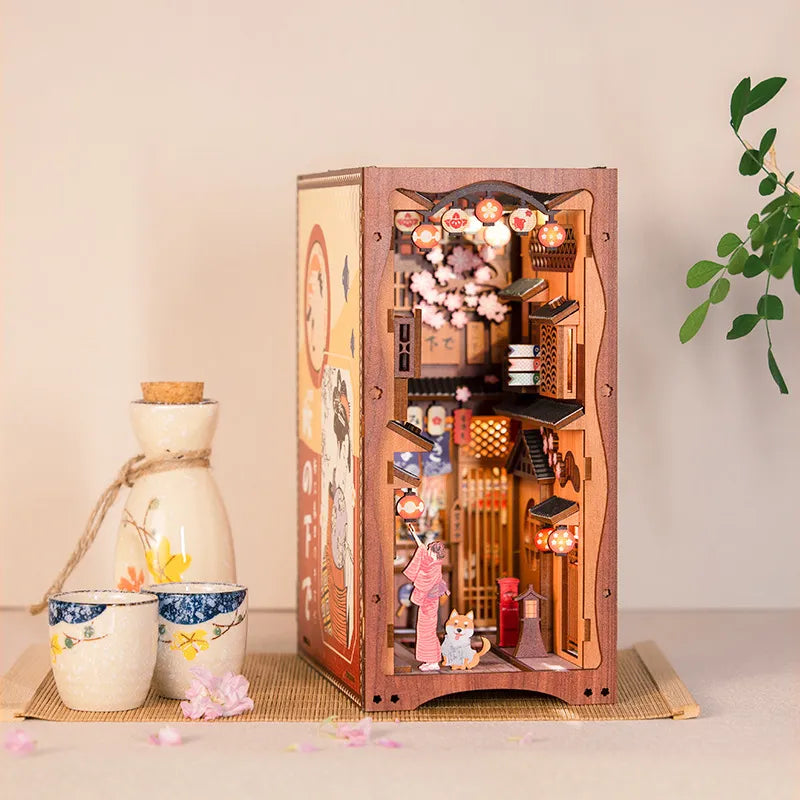
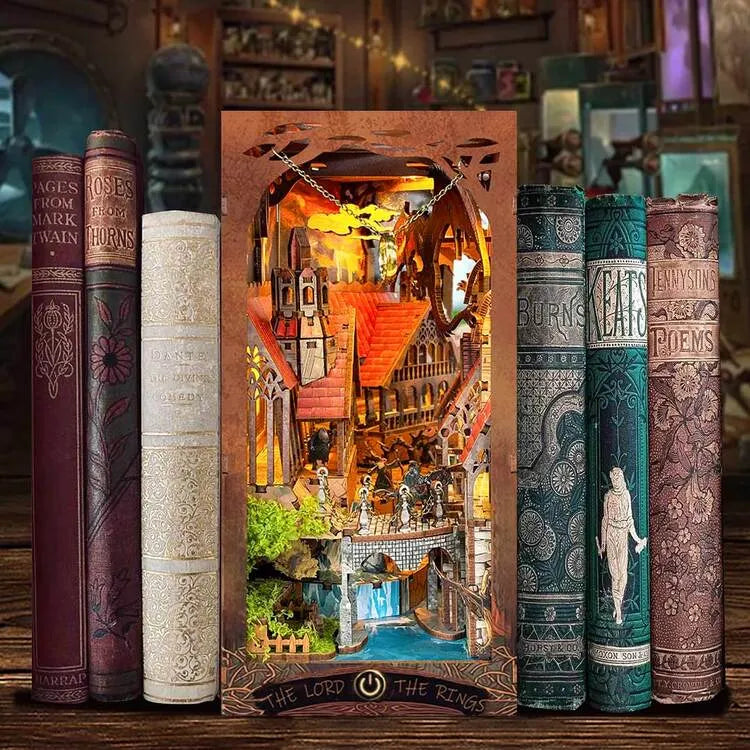
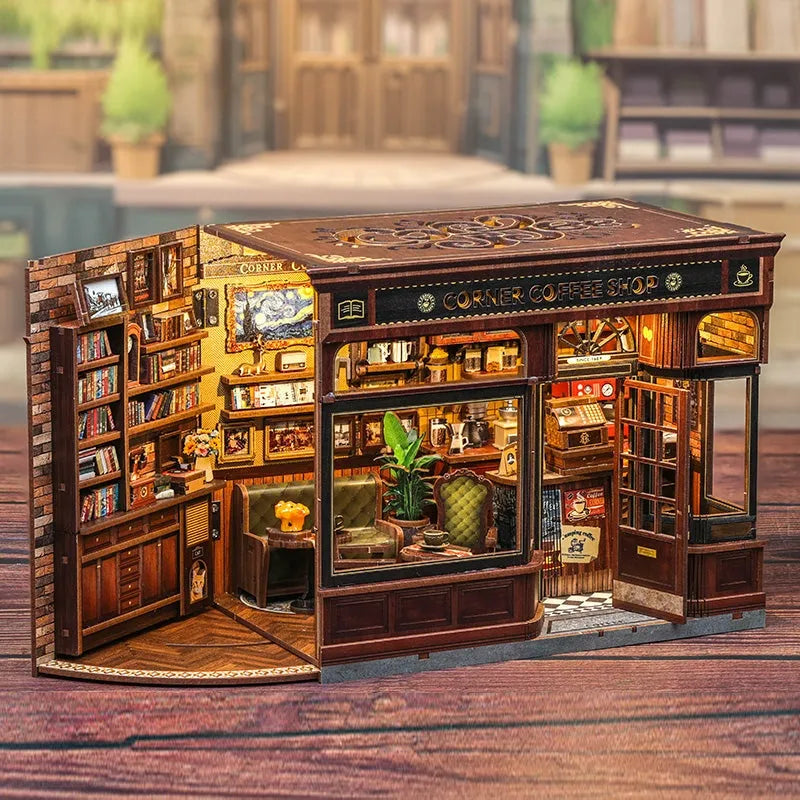
Final Checks Before You Finish
- Check the perspective. View the scene from the position where it will stand and make sure the walls, floor and background guide the eye without any unintended distortion.
- Remove distractions. Taking away one detail can make the focal point stronger. Do not add something simply to fill an empty space.
- Tell the story without explaining everything. An open book, an abandoned cup or a door left ajar lets the viewer imagine who was there a moment ago.
- Do not improvise functional changes. Add mirrors, extra lighting, paint or ageing effects only when they are compatible with the structure, materials and instructions.
💕 Your First Book Nook Should Make You Want to Build Another
Do not automatically choose the largest or most intricate model. A satisfying first project combines a theme you genuinely like with a difficulty level that allows you to enjoy the building itself.
Compare the size, level and features on the product page, prepare a stable workspace and follow the sequence in the instructions. The finished scene will remain between your books, but the value of a Book Nook begins earlier—in the time and attention you give to building it.
Share:
Birthday Gifts for Women over 50: Personal Ideas & Messages
Book Nook or Miniature House: Which Project Suits You?