

Creative Projects and Concentration: Step by Step, Without Pressure
Telling a child or teenager to “pay more attention” rarely helps. A creative project offers something more concrete: a visible goal, understandable steps and the satisfaction of seeing something take shape under their hands.
This does not mean that craft is a treatment or that it guarantees improved attention. It can, however, create an enjoyable setting in which to practise patience, planning and persistence. The level of difficulty is crucial: interesting enough to spark curiosity, but not so complex that every step becomes frustrating.
Why It Can Feel Easier to Stay with the Task
A well-chosen project makes the work easier to understand: you can see what comes first, what is changing and when a stage is complete.
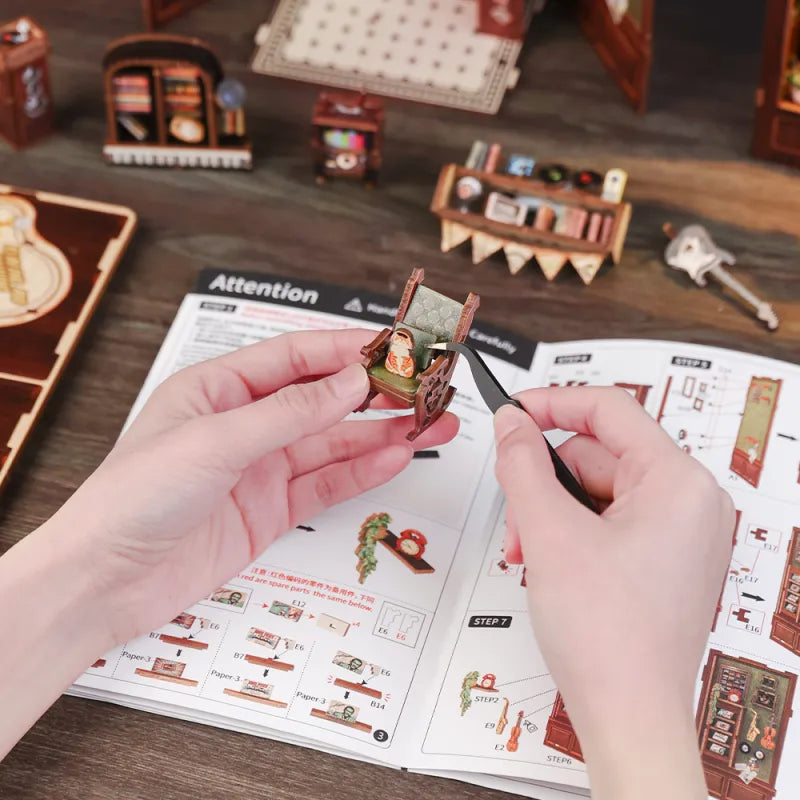
Hands and eyes work together. Cutting, folding, aligning and joining parts involves noticing details and adjusting movements. The task remains tangible, and the effect of each choice is immediately visible.
Steps provide direction. An illustrated sequence or short list prevents everything from having to be remembered at once. Completing one component makes progress recognisable.
A mistake becomes a defined problem. A part turned the wrong way or a join that does not fit invites the builder to stop, compare and try another solution. An adult can support that thinking without taking over the work.
A break belongs to the project. Stopping at a clear point and knowing where to continue is often more useful than carrying on until tiredness takes over.
Create a Workspace with as Few Interruptions as Possible
You do not need a separate hobby room. What helps most is a table that feels predictable and easy to use.
- Prepare materials in advance. Divide parts, adhesive and tools between small trays so that searching does not continually interrupt the work.
- Choose a small finishing point. Completing one figure or section is clearer than trying to “get as far as possible”.
- Limit avoidable distractions. Turn off screens that are not needed and keep only the materials for the current step on the table.
- Protect the pleasure of trying. An imperfect result is not a failure. Correct what prevents safe progress, rather than every small difference.
- Help without taking over. Ask questions, demonstrate one action if necessary, then return the project to the builder.
Different Ages and Experience Call for Different Projects
Difficulty should suit the age, experience and tools involved, rather than a general promise to “train concentration”.
- For younger children: collage, simple folding and construction with large, suitable materials provide a clear goal. Avoid small parts and unsuitable tools; the level of supervision always depends on the materials being used.
- For those with more practical confidence: origami, card scenes and simple constructions introduce longer sequences without immediately demanding many hours of work.
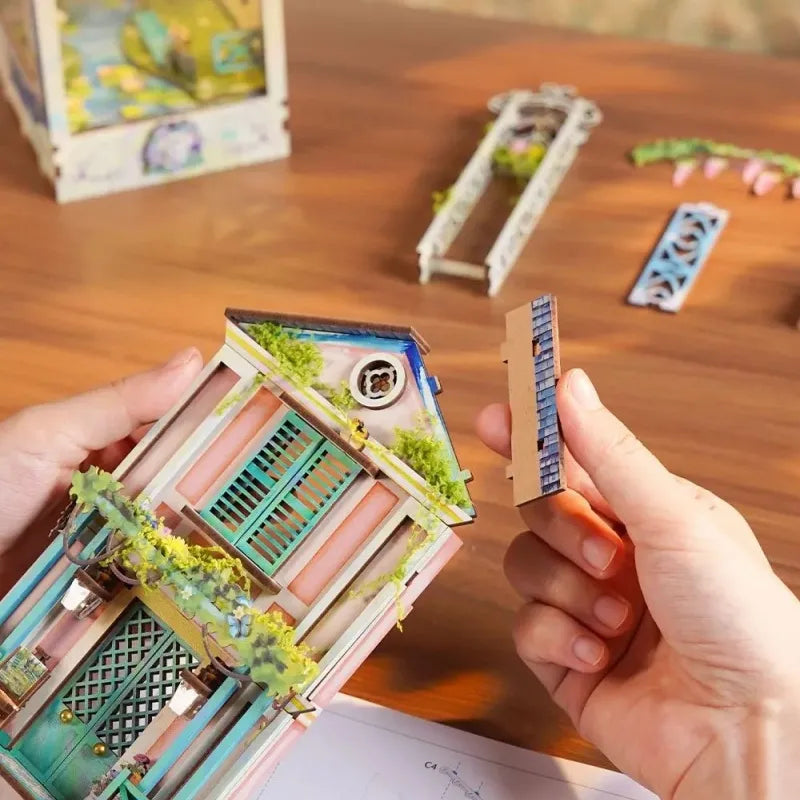
- For teenagers: 3D puzzles, model building and detailed miniatures allow them to plan several stages and divide the project over multiple sessions.
Many kits in the booknook.de selection carry a recommended age of 14 or over, so they are not general craft activities for young children. Before buying, always check the age guidance, difficulty, tools and features on the page for the specific model.
From Building to Reading: a Natural Connection
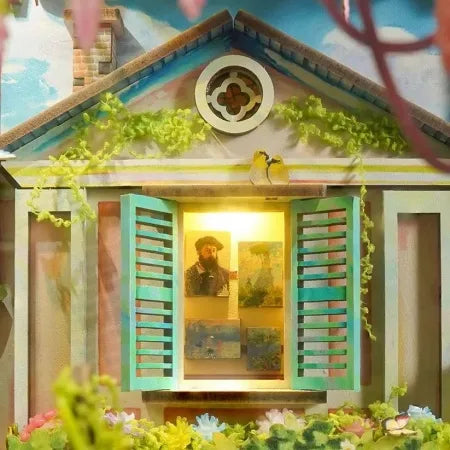
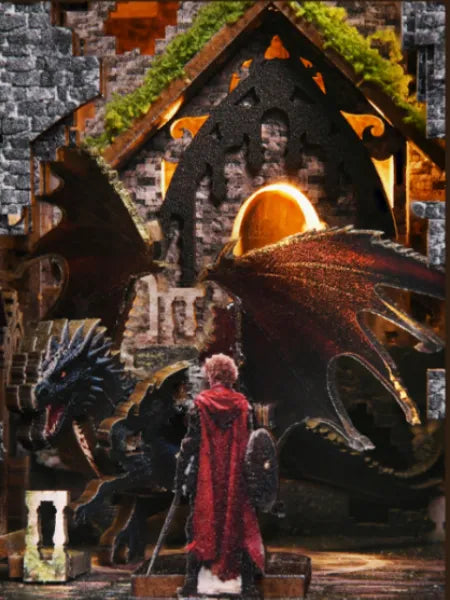
Making with your hands and reading are different activities, but they can enrich one another. After a story, you might recreate a place, object or character with paper and card. Starting from a miniature, you can instead imagine who lives there, what happened before and which detail changes the story.
Not every book needs to become an assignment. The connection works when curiosity remains in charge: the story supplies images and ideas, the project gives them form, and both experiences become more personal.


💕 Curiosity Before Performance
A creative activity can provide a manageable, absorbing and satisfying moment, particularly when the difficulty is suitable and an adult does not turn the result into a judgement.
Pay more attention to the willingness to return after a break than to the number of minutes spent at the table. When difficulties with attention persist and affect everyday life or school, a building project is not a substitute for professional assessment. At home, the most valuable thing you can offer is a place to try with confidence, make mistakes and discover.
Share:
From Clutter to Character: How to Style a Bookshelf
Birthday Gifts for Women over 50: Personal Ideas & Messages