

How to Style a Bookcase: Balance, Rhythm and Personality
A bookcase holds more than books. It reveals what you read, which objects matter to you and how you use the room. When every compartment is filled to the edge, however, even beautiful things disappear into the visual noise.
Begin by looking at how you genuinely use the bookcase. Which books do you reach for often? Where do papers and loose items collect? Which shelves are too high or too deep? A good arrangement begins with those answers, not with an interiors photograph you are trying to copy.
With a few clear principles—function, rhythm, changes in height and empty space—you can make the bookcase calmer and more personal without turning it into a display that can never be touched.
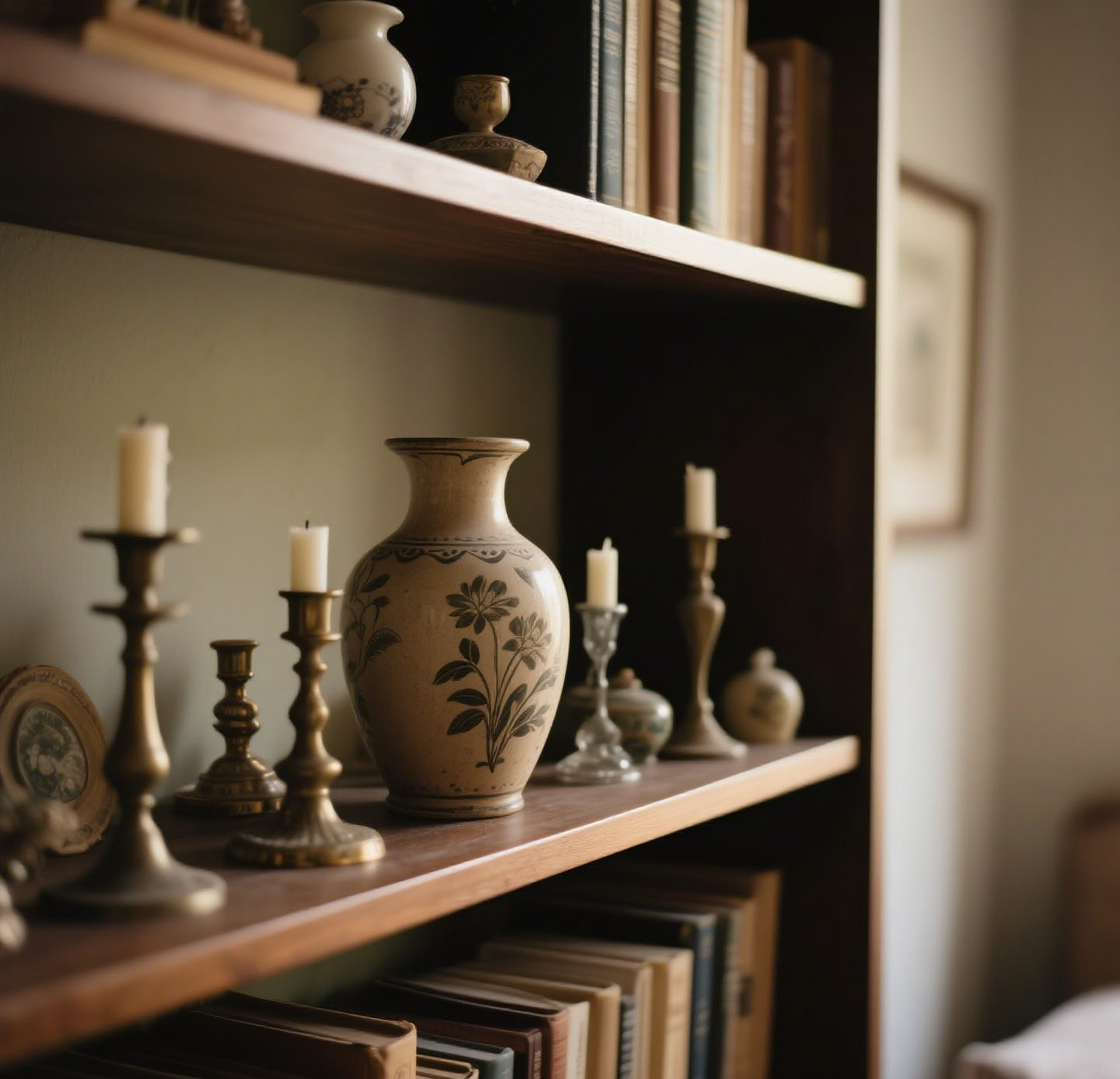
Begin by Removing, Not Adding
Empty one shelf at a time, clean it and return only what you genuinely use or enjoy seeing.
- Arrange books in a way that works for you. Group series, authors or subjects, and find another home for duplicate or unwanted copies. A book you rarely read may still have value as a reference or carry an important memory.
- Give personal objects room to breathe. Photographs, travel mementos and inherited pieces can stay, but they do not all need to compete for attention on the same shelf.
- Leave some space. Empty space separates shapes and colours and keeps the books easy to reach.
Use Books as Structure, Not Merely as a Backdrop
- Alternate rows with small stacks. Upright books remain easy to find; a horizontal stack interrupts the line and can support a light object, provided everything is stable.
- Use colour with restraint. A bookcase arranged entirely by colour can look striking but may make individual titles harder to find. Two or three recurring tones often create a more natural sense of cohesion.
- Do not turn books around for a uniform look. The bookcase still needs to be useful. For a calmer section, group similar spines or leave more open space.
- Connect subjects. A miniature studio beside art books or a Japanese landscape alongside travel writing creates a relationship without needing to explain everything literally.

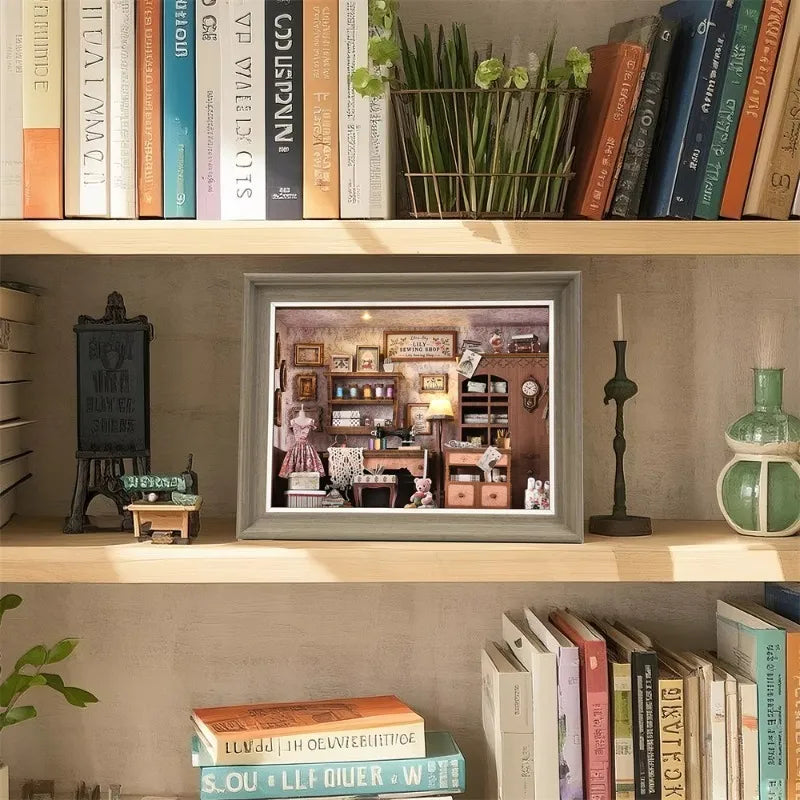

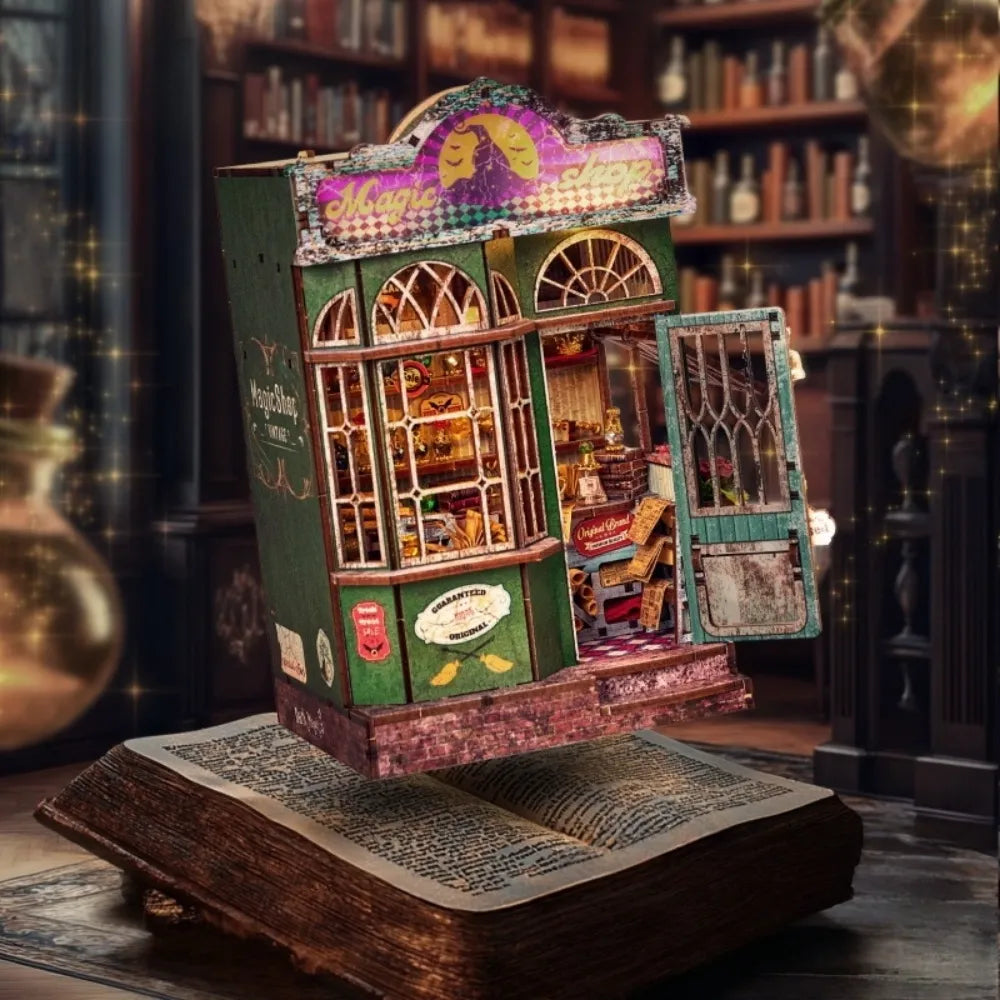
Personal objects give a bookcase character when they are chosen and grouped with intention.
- Plants suited to the position. A small plant softens the lines of the books, but consider light, watering and a safe distance from paper and electrical components.
- Mementoes with meaning. A photograph, card or family object says more than decoration bought simply to fill a gap.
- Scenes that add depth. A Book Nook uses the space between the books to open up a lane, library, garden or miniature fantasy world.
There is no perfect number of objects. Two can work better than three when their height and visual weight differ. Look at the arrangement as a whole and keep the shelf practical and easy to clean.
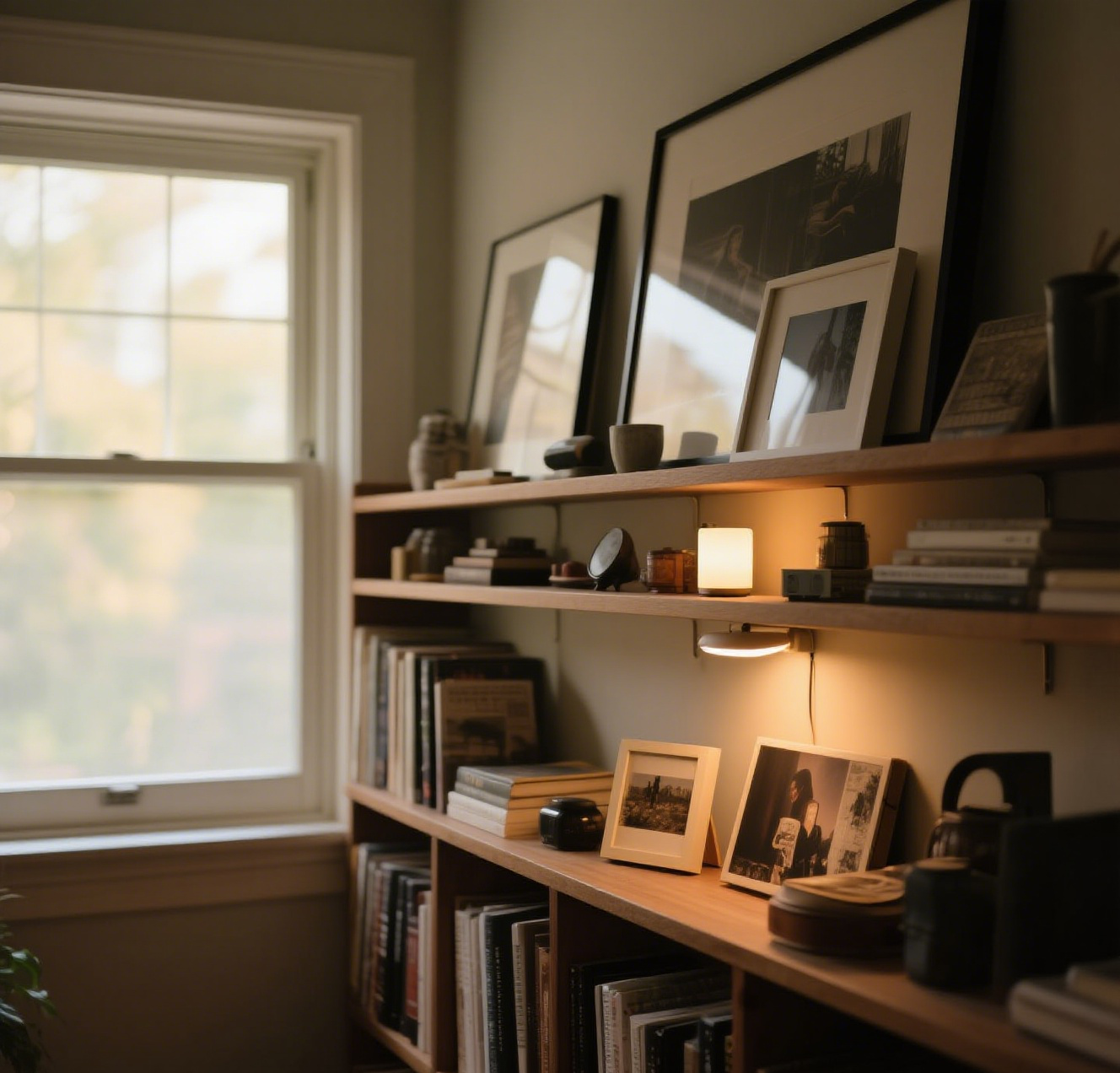
Depth and Light: the Third Dimension
Do not line everything up along the front edge. Larger elements can sit a little farther back, while smaller objects remain at the front without covering book titles. This creates depth and makes the shelf feel less flat.
In a dark room, an adjustable lamp or a shielded light strip can make the bookcase easier to see. Avoid harsh cool light, direct glare and prolonged sunlight on covers, paper and wood. If a Book Nook has lighting, always check the exact features and power supply on the individual product page.
💕 The Best Bookcase Grows with You
You do not need to create a final, permanent composition. Leave room for new books, change objects with the seasons and remove anything that no longer feels relevant.
As a final check, make sure frequently used books remain accessible, fragile objects stand securely and every shelf has some visual breathing room. A well-arranged bookcase is never entirely static: it quietly tells the story of what you read, make and like to keep close.
Share:
Creative Gifts for Long-Distance Couples: Feeling Close from Afar
Creative Projects for Practising Attention without Pressure