

Miniatures Through the Seasons: One Creative Project for the Whole Year
With one reusable base, you can represent spring, summer, autumn and winter without starting again each season. Change the palette, background and a few details, and the miniature world can move through the year alongside what you see outdoors.
This guide suggests simple materials, ideas for four compositions and ways to work on the project together without continually accumulating more decoration or buying an entirely new project for every season.
The first blossom, long summer light, a fallen leaf or a winter window: one recognisable change is enough to begin a small scene.
In this way, the project can become a personal or shared tradition. Each season you add a material, memory or handmade object while the base remains the same. Its value lies not in perfection, but in the attention you give to deciding what deserves a place in the scene.
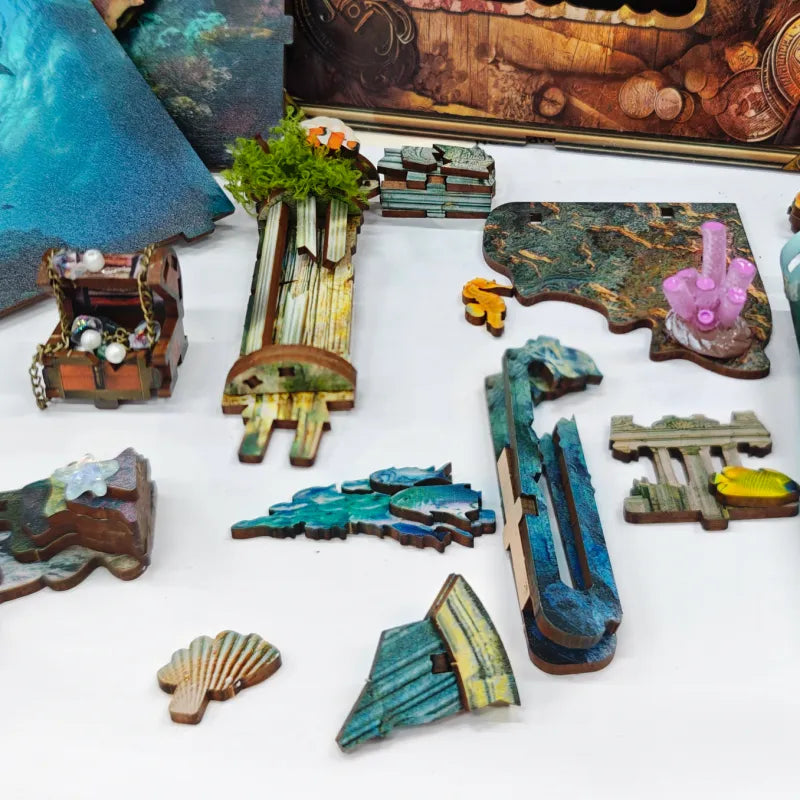
Why Create a Miniature for Every Season?
- You learn to look more closely. Colours, shapes and materials come from changes you genuinely notice, rather than from generic seasonal decoration.
- There is room for your own story. The same season may recall a journey, a garden, a street or a moment with family.
- The project grows over time. With a sturdy base and removable details, you can add one meaningful element each year.
- You can make it together. Choosing colours, drawing the background and arranging the composition can be divided into tasks suited to different ages and abilities.
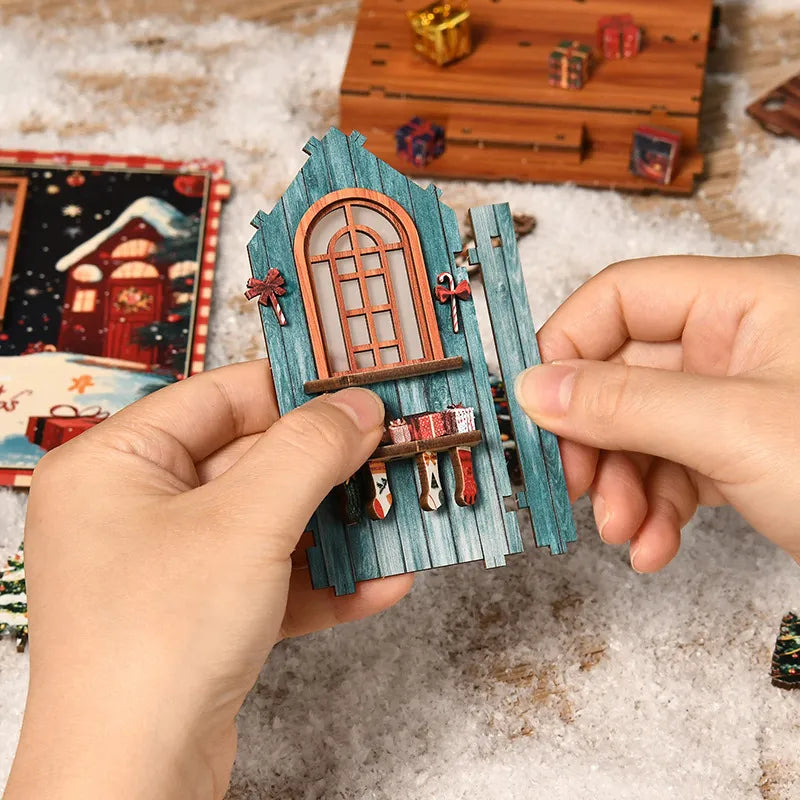
The Foundation: What Will You Need?
Choose a sturdy base that is easy to move: a tray, deep frame, small wall shelf or shallow box. Before decorating, measure the place where you intend to display the scene.
- A changeable background: card, paper or fabric fixed without making every decision permanent.
- A limited palette: three main colours keep the composition calm and recognisable.
- Dry, clean materials: paper, felt, wood, stones or natural finds collected only where this is permitted.
- Separate storage: one envelope or box for each season prevents damage and unnecessary accumulation.
Four Seasons, Four Creative Directions
Use these examples as a starting point. Adapt the colours and materials to your surroundings, your home and the memories that genuinely belong to your year.
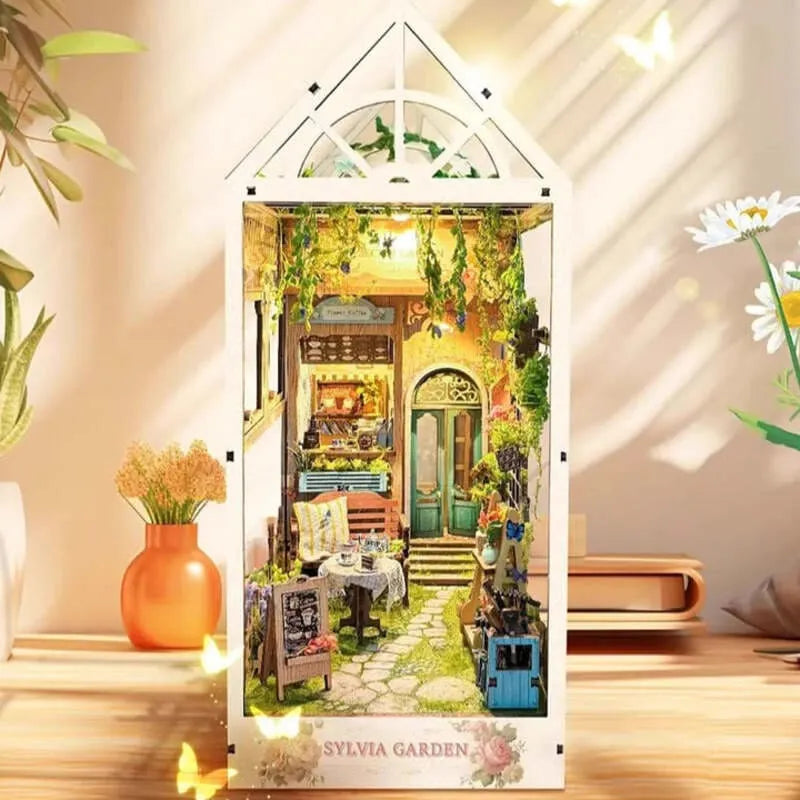
Spring: new green and soft colour
Work with pale green, cream, dusty pink or soft blue. Make small flowers from paper, paint fallen twigs or build a greenhouse from card and a transparent material suitable for the project.
A seed packet, handwritten plant label or botanical miniature is enough to suggest the season. If you use natural finds, allow them to dry completely and never enclose damp materials inside a display case.

☀️ Summer: Light, Travel and Life Outdoors
Tell the story of summer with blue, yellow, deep green and pale wood. Draw a postcard from a favourite place, build a small awning or make a table for an outdoor scene.
Shells and sand are not essential. A length of fine cord, a miniature bicycle or the shadow cast by a sunshade can evoke long summer days just as clearly. Do not use real water in the scene, and collect natural materials only where this is permitted without removing anything from protected areas.
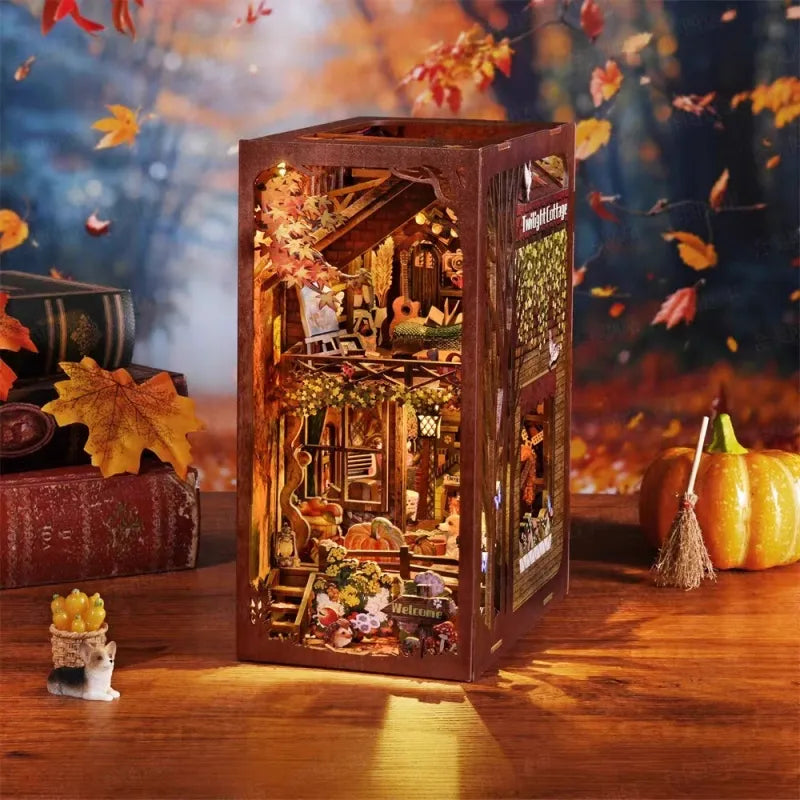
🍂 Autumn: Texture and Warm Light
Terracotta, rust brown, forest green and dark wood create depth without requiring many objects. Fully dried leaves, clean acorns, textured paper and small pieces of fallen bark add tactile interest.
You might build a bench, stack of books or little reading corner. Warm light can deepen the scene when it is a feature of the model and is used in accordance with the accompanying instructions.
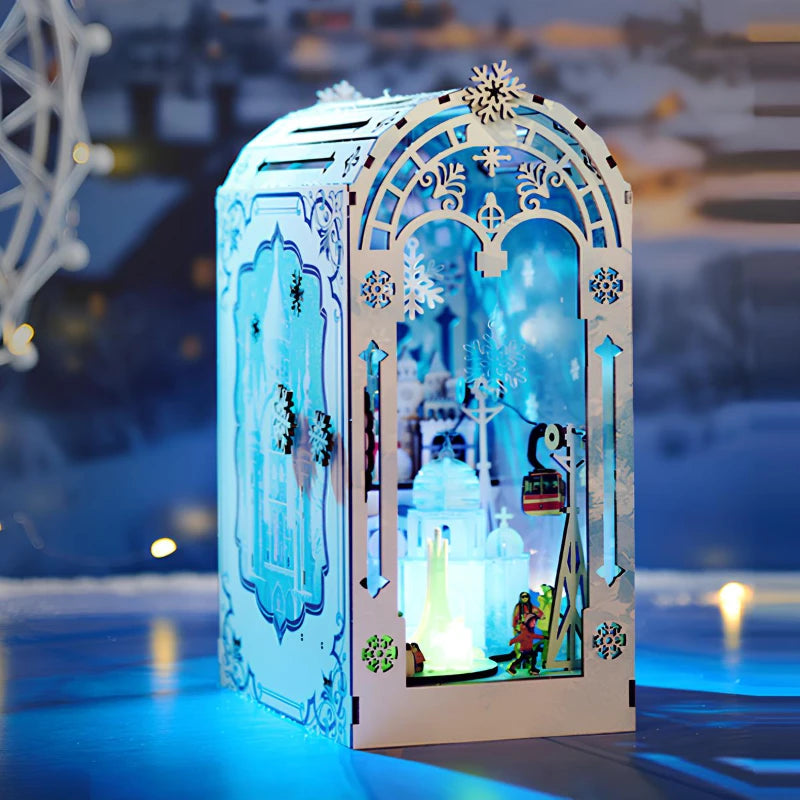
❄️ Winter: Clear Shapes and Contrast
Try white, grey, dark green and one small metallic accent. Torn paper, white fabric or modelling material suitable for the project can suggest snow; you do not need to cover every surface.
Fine branches, paper windows and geometric roofs can create a readable scene with very few elements. Use only lighting components intended for the model. Open flames have no place near paper, wood, fabric or dry natural materials.
Your Season, Your Small Story
A seasonal miniature does not need to recreate an entire landscape. Choose one change and build around it, leaving room for whatever you may want to add next year.
With a reusable base and a few carefully chosen materials, the project remains light, personal and able to grow alongside the home and the people who live there.
Share:
Book Nook or Miniature House: Which Project Suits You?
3D Wooden Puzzles: Learning through Building, Step by Step